Veebs
- 1.9
- Rating
- 10.00K
- Installs
- Free
- Price

 Analysis by App-foxy
Shopping apps are easy to judge by how quickly they help me find a product, but grocery shopping has another test: can I use the app comfortably when my attention is divided, my hands are busy, or the shop itself is noisy and rushed? Veebs is a free shopping app from VBS CORP LLC built around everyday grocery shopping and scanning. I approached it less like a simple product catalog and more like a tool I might use while planning a basket, checking an item in a store, or trying to make a decision without relying entirely on packaging.
My overall impression is mixed. The idea is useful, especially for people who want a mobile-first way to examine grocery products, but the experience needs patience. Its average rating is 1.9 from roughly 390 ratings, and that is an important warning for anyone expecting a polished, effortless replacement for a supermarket app. Veebs can be worthwhile for curious shoppers who are prepared to scan and inspect information, yet it is not the first app I would recommend to someone who needs guaranteed simplicity or a completely dependable shopping routine.
How Veebs handles readability and navigation
I’d use this section to look beyond whether the screen is legible and consider how easily a shopper can keep track of each step. A useful habit is to decide in advance what information matters for a particular purchase, so the phone stays a tool rather than another source of distraction. That focus also helps frame how scanning may work for people with different motor and sensory needs.
You May Also Like

 Pandora - Music & Podcasts
Pandora’s Music Is Easy to Start, but Harder to Recover
Pandora’s strength is its low-effort path from a seed to a station. Its weak spot is how much confidence it asks you to place in connection, setup, and quiet recovery.

 8 Ball Pool
 Is Built on Rivalries, Rematches, and Routine
A close look at the rivalries, rematches, shared routines, and unanswered safety questions that turn a quick pool match into a persistent mobile community.

 Samsung Music
’s Quiet Strength Is Playing What You Already Own
Its reach comes less from spectacle than from dependable access to a personal library. That simplicity is both the app’s strongest retention engine and its ceiling.

 AccuWeather: Weather Radar
AccuWeather Review: A Quick, Clear Forecast for Everyday Decisions
For everyday plans, the best forecast is the one you can understand quickly. AccuWeather makes rain timing, radar, and local conditions easy to act on, with a few trade-offs.

 Hill Climb Racing
Why Hill Climb Racing Still Turns Crashes Into One More Run
A tiny car, a bumpy hill and one more upgrade: Hill Climb Racing keeps resurfacing because its simple chaos makes every near-miss feel personal.

 AliExpress - Shopping App
AliExpress Makes Global Shopping Feel Personal, but Shoppers Bear the Risk
AliExpress turns a global marketplace into a pocket-sized discovery engine. Its reach is useful, its shopping loop compelling, and its trade-offs easy to miss.
More From Our News Desk
View All News


A focused purpose instead of a full supermarket ecosystem
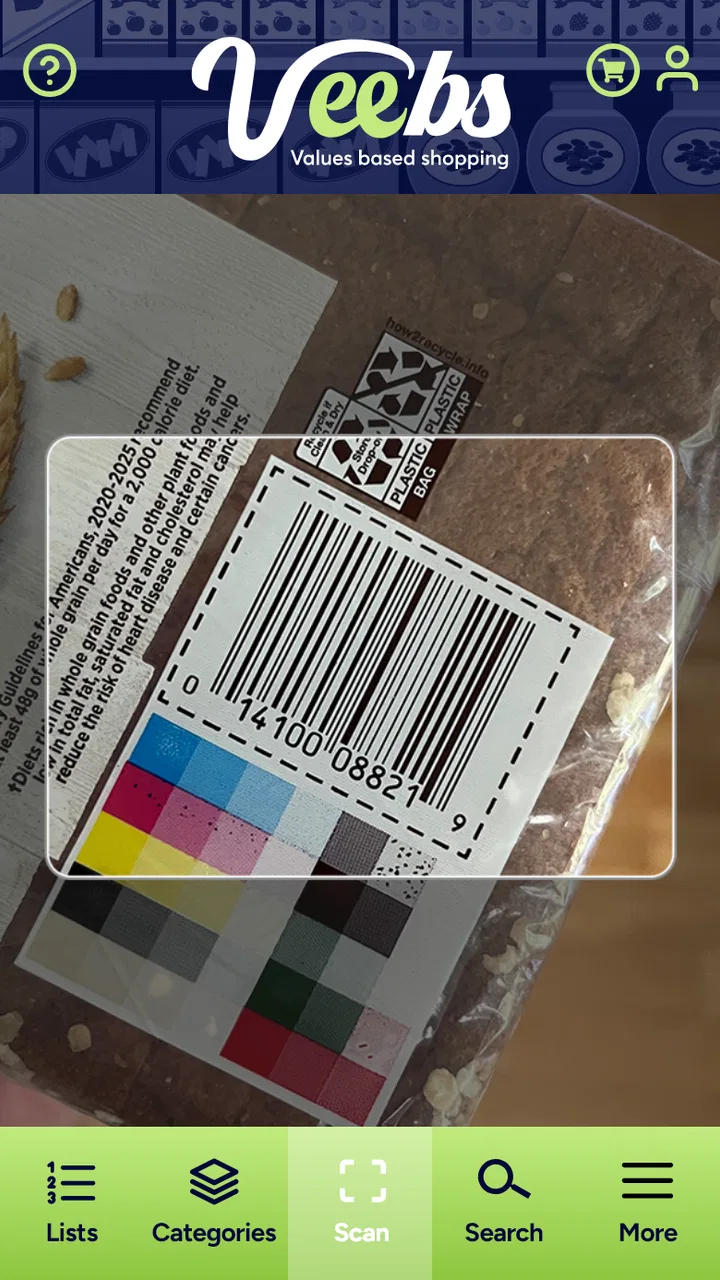
Veebs is best understood as a grocery shopping and scanning companion rather than a complete retailer replacement. That distinction matters. A supermarket’s own app usually concentrates on store-specific stock, loyalty offers, digital receipts, pickup, or delivery. Veebs approaches the visit from the product side: I can think about an item in front of me, scan it, and use the app as part of the decision process.
That narrower purpose can make the app easier to understand conceptually. I am not opening it to manage every part of a grocery account. I am opening it to investigate products. For a shopper who prefers a direct workflow, that can be less distracting than an app packed with coupons, advertisements, account prompts, and store departments.
At the same time, a focused purpose does not automatically mean effortless navigation. Scanning apps depend on a clear transition between camera use, product recognition, and the information shown afterward. If any of those steps feels uncertain, the user may wonder whether the scan worked, whether the product is supported, or whether another tap is needed. This is particularly important for people with limited vision, reduced concentration, or little patience for trial and error.
What I would do before relying on it in a large shop
I would test Veebs at home before taking it into a crowded supermarket. I would scan a few packaged groceries under ordinary indoor light, note how quickly the app responds, and check whether the resulting product information is easy for me to locate. This small rehearsal is more useful than simply installing the app and assuming the first real shopping trip will go smoothly.
A practical habit is to use it during planning rather than making it the only tool at the shelf. I might scan items from a short list before leaving, decide which products deserve closer attention, and then use the app in-store only when a choice is genuinely unclear. This reduces the need to hold a phone, a basket, and a product at the same time.
For readers wondering whether it replaces a grocery delivery or supermarket app, my answer is no. It serves a different part of the process. A retailer app is usually better for buying from a particular store, while Veebs is more relevant when the product itself is the object of attention. Using both can make sense, but someone looking for one app to handle ordering, payment, pickup, and scanning should look elsewhere.
Readable information is more than large text
Readability is not only about font size. In a scanning workflow, the order of information matters just as much. A user may want to know quickly whether the correct product was recognized, then inspect the details that affect the purchase. If the page places secondary material before the key result, even a person with good eyesight may find the screen tiring.
I would approach Veebs with the expectation that careful reading may be part of the experience. That makes it more suitable for deliberate comparison than for rapid-fire shopping. Someone who enjoys checking labels and weighing alternatives may appreciate the extra pause. Someone who needs to move quickly through a weekly shop may find the process slower than reading the package or using a familiar store search.
The app is rated for Everyone, which makes its general audience broad, but that label should not be confused with a promise that every shopper will find the interface equally comfortable. Age suitability describes the type of content, not the quality of navigation for people with different abilities. My advice is to judge the actual screen flow on your own device before building an important routine around it.
Using the scanner with different motor and sensory needs
Here I’d consider the physical demands that can be easy to overlook: holding the phone steady, aiming its camera, and returning attention to the result. Those demands vary from person to person, so I’d treat a scan as an optional shortcut rather than the only way to investigate an item. The setting matters too, which is why it’s worth thinking about where the app fits most comfortably.
Why scanning can help some shoppers
Scanning has a genuine advantage over manually typing a product name. Typing on a phone can be awkward for people with hand tremors, joint pain, limited dexterity, or difficulty using a small keyboard. A camera-based action may reduce the number of precise taps needed to begin investigating an item.
It can also help when packaging uses dense text or when a shopper wants to avoid repeatedly searching through similar product names. Instead of remembering the exact wording on the label, I can start with the physical item. That is a useful shift for people who find text entry tiring or who process information more comfortably when they can connect the screen to the object in front of them.
However, scanning is not automatically accessible. Holding a phone steady, positioning the camera, finding the correct angle, and keeping the product inside the frame can be difficult for someone with limited arm movement or involuntary motion. Reflective packaging, curved labels, small barcodes, and poor lighting can add frustration. In those situations, manual searching or asking another person may be faster than repeating the scan.
Hands-busy and one-handed situations
A realistic example is a parent shopping with a child while carrying a basket. The parent may want to check an unfamiliar snack, but only one hand is free and the store aisle is crowded. Veebs could be useful if the product can be positioned quickly and the phone remains easy to operate one-handed. It becomes less practical if the shopper has to perform several delicate adjustments while also supervising the child.
The same trade-off applies to older shoppers who use a walking aid, people wearing gloves, and anyone whose hands are occupied by reusable bags. In these circumstances, I would scan only a small number of decisive items rather than every product. A short list prepared in advance is more realistic than expecting the app to manage the entire visit.
For users who rely on touch accuracy, the best approach is to avoid rushing through the interface. I would pause after each action and confirm that the screen has changed before tapping again. Rapid repeated taps can create confusion in any mobile app, especially when the user cannot easily tell whether a scan is processing or has failed.
Vision, hearing, and attention
A scanning tool can reduce dependence on tiny package print, which is a meaningful benefit for shoppers with low vision or reading fatigue. Instead of leaning close to a label, I can use the phone as an intermediary. That said, the app still depends on the phone display, and the usefulness of the result depends on how comfortably the user can read or enlarge what appears there.
I would not assume that sound is necessary or that every important state is communicated audibly. A person with hearing loss should not be disadvantaged by relying on visual confirmation, but the reverse question matters too: a person who struggles to read a screen may need a companion, device-level assistance, or a different shopping method. Veebs should be treated as one layer of support, not as a complete answer to every sensory need.
Attention is another overlooked factor. Grocery aisles create interruptions: announcements, queues, children, conversations, and time pressure. A shopper with cognitive fatigue may benefit from using Veebs at home, where the surroundings are calmer, instead of trying to interpret product information beside a busy shelf. The app’s greatest inclusive value may therefore come from moving part of the decision away from the store.
Situational access: where the app fits best
The best place to use a scanning app can depend as much on noise, crowds, and time pressure as on the phone itself. I’d plan the more thoughtful product checks for a calmer moment and save in-store use for questions that genuinely affect my choice. That distinction leads naturally to the remaining barriers, including the effort and possible cost of relying on a mobile tool.
Planning at home
Home planning is the setting in which I would use Veebs most confidently. I can make a short list, scan products without blocking an aisle, and decide what information is actually useful before shopping. This workflow also gives me time to enlarge the phone display, adjust my grip, charge the device, and ask someone for help if a product is difficult to scan.
It is particularly sensible for people who experience sensory overload in supermarkets. Doing the investigative work at home can turn the store visit into a simpler retrieval task. Instead of comparing several packages under harsh lighting, I can arrive with a clearer idea of which items deserve attention.
There is a trade-off, though. Products change, packaging varies, and the item available in the store may not be identical to the one considered earlier. I would still check the physical product before buying. The app can support a decision, but it should not encourage me to ignore the actual label, size, condition, or shelf context.
In-store scanning
In a shop, Veebs is most useful for a specific question rather than continuous browsing. I might use it when two similar products are difficult to distinguish, when the package is hard to read, or when I want to pause before placing an unfamiliar item in the basket. This selective approach saves battery, reduces handling, and avoids turning every aisle into a technical task.
Privacy and comfort also matter in public. Pointing a phone camera around a crowded aisle can make some people uncomfortable, even when they are only scanning a package. A shopper with anxiety may prefer to step aside, use the app near the edge of the store, or complete the check before leaving home. That is not a flaw unique to Veebs, but it affects whether the workflow feels practical.
For people with limited connectivity or older phones, I would be cautious about depending on the app at the exact moment of purchase. The current version is 26.1.13 and requires at least iOS or Android 11, so device compatibility should be checked before planning a shopping routine. A supported operating system does not guarantee that an older handset will feel quick or comfortable during camera use.
Sharing the task with another person
Veebs can also fit a shared shopping arrangement. A family member, support worker, or friend could handle the physical scanning while the shopper makes the final decision. This is not a sign that the app has failed; sometimes dividing the motor and reading demands makes the whole process more dignified and less tiring.
I would agree in advance on what the scan is meant to answer. Is the goal to identify the product, compare two choices, or decide whether it belongs on the list? A clear question prevents the helper from taking over the entire decision. The shopper remains in control while the app and the other person provide practical support.
Remaining barriers and the cost of convenience
Convenience has a real cost when a shopper must repeatedly reposition a phone, interpret a result, or pause a busy trip to troubleshoot. I’d weigh that effort against the value of checking a particular grocery item, and keep a familiar alternative ready for rushed or high-stakes decisions. The next section looks at those limits without losing sight of who may still benefit.
Reliability matters more than novelty
The low average rating should make prospective users realistic. A grocery tool has to work at ordinary moments, not only during a successful demonstration. If scanning feels inconsistent, if product recognition takes too much effort, or if navigation is unclear after the scan, the accessibility benefit quickly disappears.
I would not use Veebs as my sole safeguard for a dietary, medical, or allergy-related decision. Product information can change, labels can be updated, and a digital result may not reflect the exact package in my hand. For high-consequence choices, I would verify the physical label and, where appropriate, consult a qualified professional. The app may help me investigate, but it should not replace careful checking.
Financial and device considerations
The app itself is free to download, which lowers the barrier to trying it. It includes in-app purchases ranging from $0.99 to $8.99 per item, so I would review any purchase screen carefully before committing to a paid option. This matters for families, people using managed devices, and shoppers who need predictable costs.
The operating-system requirement also excludes some older phones. That can affect accessibility because older devices are often the ones available to people on tight budgets. A user may technically want a scanning app but lack a compatible handset, enough storage, or a camera that performs comfortably in a shop. These are practical barriers, not personal shortcomings.
Another limitation is that camera-based shopping can be tiring for users with visual processing difficulties. The task involves locating the item, aligning the phone, waiting for feedback, and interpreting the result. For some people, a plain typed list, a voice assistant, or a retailer’s search tool will be less demanding. The newest or most specialized workflow is not always the most inclusive one.
Who should choose another option
I would skip Veebs if my main goal were delivery, curbside pickup, store coupons, or live inventory from one supermarket. A retailer’s own application is usually the more direct choice for those jobs. I would also hesitate if I needed a highly predictable interface for every shopping trip and had no patience to test scanning conditions first.
It is a better candidate for shoppers who enjoy examining products, want a mobile scanning layer, and can tolerate occasional friction. People who shop in calm environments, prepare lists at home, or have someone available to assist may get more from it than people who make quick, spontaneous purchases in crowded stores.
An inclusive verdict for everyday grocery decisions
My view is that Veebs has an appealing accessibility angle because it can move some of the work away from tiny package print and repetitive typing. Its scanning focus may help shoppers who find manual search tiring, and its free entry point makes experimentation possible. The strongest use case is not frantic aisle-by-aisle scanning; it is a measured process in which I investigate selected products before or during a shop.
Still, inclusive design is about dependable alternatives, not just an interesting central feature. Camera positioning can be difficult, public shopping adds pressure, and the low user rating suggests that the experience may not be smooth for everyone. I would keep a backup plan: a written or digital list, the physical label, a retailer app when ordering matters, or another person who can help with the motor and reading demands.
My recommendation is to try Veebs as a supporting grocery tool, not as the only system you trust. Install it on a compatible device, test it at home, and see whether its scan-to-information flow matches the way you actually shop. If it makes product checking easier, it can earn a place in your routine. If it adds more taps, uncertainty, or physical strain than it removes, a simpler alternative will be the more inclusive choice.
For shoppers willing to work within those limits, Veebs offers a useful way to bring product investigation onto a phone. It is not a universal answer, but it can be a thoughtful addition for specific people and situations. I would recommend it selectively, with realistic expectations and a clear understanding that convenience is only valuable when the person using it remains comfortable and in control.
FAQs for Veebs
01What is Veebs and how does the app work?
Veebs is designed to help users make more conscious choices while browsing online. The app typically provides information, context, or accessibility features related to websites and digital content, depending on the version available for your device. After installation, users should review the onboarding instructions, grant only the requested permissions, and explore the settings so the experience matches their browsing habits and privacy preferences.
02Is Veebs free to download and use?
Veebs may be available as a free download, although some features, services, or future updates could depend on the developer’s current pricing model. Before installing, check the official Google Play Store or Apple App Store listing for subscription details, in-app purchases, and supported regions. Store information can change, so reviewing the latest description is the safest way to understand what is included without payment.
03What permissions does Veebs require, and is it safe for privacy?
The permissions required by Veebs can vary according to the platform and the features you use. If the app interacts with browsing activity, it may request access that allows it to analyze or display information about visited content. Read the privacy policy before accepting, avoid granting unrelated permissions, and use the app’s privacy controls to limit data collection whenever possible. Downloading from an official store is also recommended.
04Which devices and operating systems support Veebs?
Veebs availability can differ between Android and iOS, and certain functions may require a specific operating-system version, browser, or device configuration. Check the official store page for the current compatibility requirements before downloading. Users should also confirm that their phone has enough free storage and that required browser integrations or accessibility settings are supported, since the complete experience may not be identical across platforms.
05How can I get the most out of Veebs after installing it?
Start by completing the setup process carefully instead of skipping the introduction, because it may explain how Veebs works with your browser or other device features. Review notifications, privacy options, and content preferences, then test the app with familiar websites or supported services. Keep Veebs updated, read release notes when available, and contact the developer through the official support channel if a feature behaves unexpectedly.
Pros
- Helps identify common online scams and misleading digital behavior.
- Practical examples make internet-safety lessons easier to understand.
- Useful for introducing children to responsible online habits.
- Encourages users to think critically before trusting online content.
- Can support conversations about privacy
- consent
- and digital boundaries.
Cons
- Some lessons may feel too basic for experienced internet users.
- Coverage may not include every new platform or emerging online threat.
- Educational content can become repetitive after extended use.
- Requires regular updates to remain relevant as online trends change.
- May offer limited value without discussion or guidance from an adult.

Veebs
Gallery